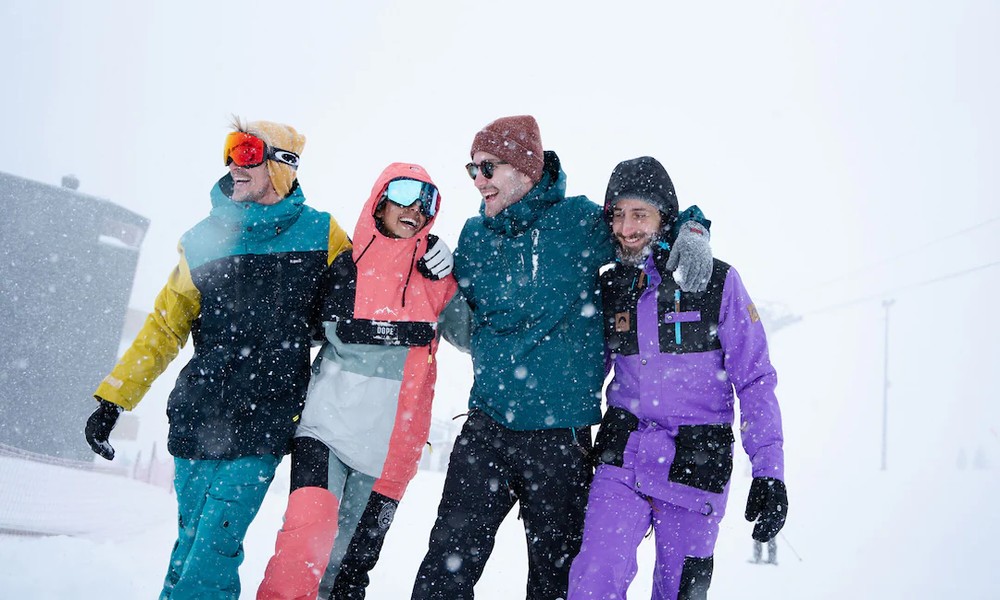

It’s one of skiing’s most common challenges: you’ve assembled a group for a catered chalet three valleys ski holiday, friends, family, colleagues and the abilities range from terrified first-timer to someone who spent three seasons in Verbier. How do you make sure everyone has a good time?
The good news is that with a bit of planning, a mixed-ability ski group can genuinely work. The bad news is that it requires more organisation than most people anticipate. Here’s a practical guide to making it happen.
Why Mixed Ability Groups Struggle (and How to Avoid It)
The default failure mode for mixed-ability ski groups is well-known: the better skiers get bored waiting, the beginners feel guilty holding everyone up, the middle group ends up babysitting both ends, and by Wednesday everyone is quietly wishing they’d gone with different people.
This happens when groups try to ski together all the time, which, for a group spanning more than about one and a half ability levels, simply doesn’t work well. The slopes that challenge a beginner bore an advanced skier; the slopes that excite an advanced skier terrify a beginner.
The solution isn’t to force everyone to ski the same runs. It’s to build a holiday structure that gives everyone appropriate skiing during the day and brings the group together at other times, mornings, lunchtimes, après-ski, and the evening meal.
Step One: Honestly Assess the Levels
Before you can plan, you need an honest assessment of where everyone is. The ski industry uses various ability descriptors, but a practical breakdown looks like this:
Complete beginners: Have never skied before. Likely to spend their first two to three days in ski school on a nursery slope.
Near-beginners: Have skied once or twice before but are not confident. Can usually get down a gentle blue run with effort. Will likely benefit from ski school.
Casual intermediates: Can reliably ski blue runs and are beginning to attempt easier reds. Comfortable on most groomed terrain in good conditions.
Solid intermediates: Can ski most red runs comfortably and some blacks in good conditions. The largest and happiest group in any resort.
Advanced: Comfortable on all pisted terrain including steep blacks, beginning to explore off-piste. Can keep up on most mountain terrain in most conditions.
Expert: At home on all terrain including off-piste, moguls, steep couloirs. Likely frustrated by pisted runs alone.
Be honest. People consistently overestimate their own ability (and occasionally underestimate it imposter syndrome exists on ski slopes too). A casual intermediate who hasn’t skied in three years may need to treat themselves as a beginner for the first day or two.
Step Two: Choose the Right Resort
Resort choice is the most important pre-trip decision for a mixed-ability group. Look for:
Large, well-connected ski areas
Bigger ski areas give everyone more to do independently. If there are only 20 runs in the resort, the experts will exhaust the interesting ones in two days. Large areas like the Three Valleys, Espace Killy, or Les Arcs/La Plagne give enough variety that no one runs out of terrain.
Genuine beginner areas
Some resorts have excellent, dedicated nursery areas with gentle slopes and free or cheap beginner lifts. Others are more challenging for beginners, resorts that are inherently steep or have no true nursery zone can make the early days genuinely miserable for a complete novice.
Good beginner provision in major French resorts:
- Val Thorens: Broad, gentle slopes in the resort itself; good ski school
- Tignes le Lac: Decent nursery area at resort level
- La Plagne: One of the better family/beginner resorts in France
- Les Gets: Very family-friendly with good beginners slopes and a relaxed atmosphere
Efficient lift systems
Having to queue 45 minutes for a gondola wastes everyone’s limited ski time, particularly painful for beginners who have even less time on actual skis each day.
Step Three: Plan the Week, Not Just the Day
The classic mistake is trying to organise everyone on the day. Instead, agree on a broad structure at the start of the holiday:
Day 1 (usually Sunday): Gentle day for everyone. Even advanced skiers benefit from warming up, checking kit, and getting their mountain legs back. Ski together on easier terrain. This is a good day for beginners to do a half-day ski school session.
Days 2-5 (Monday-Thursday): Split up. Beginners in ski school. Intermediates and above ski in ability-appropriate groups. Plan specific meeting points, a particular mountain restaurant at a particular time, rather than trying to coordinate by phone (signal is often poor on the mountain).
Day 5 or 6 (Friday): Optional group ski by this point, beginners have usually progressed enough that there’s some overlap with the easier terrain that intermediates can enjoy. A gentle morning run together is often one of the holiday’s best moments.
Step Four: Make Ski School Work for the Beginners
If you have genuine beginners in the group, ski school is not optional, it’s essential. Trying to teach a partner or friend to ski yourself is a recipe for damaged relationships and bad habits. Professional instructors do this for a living; they know how to build confidence and correct technique in a way that friends and family simply cannot.
In French resorts, two main ski school options exist:
ESF (École du Ski Français): The national ski school, ubiquitous in every resort. Large group lessons (sometimes 8-12 people), relatively affordable, consistent quality. The large group sizes can be frustrating for those who want more individual attention.
BASS (British Alpine Ski School) and other private schools: Smaller group or private instruction, often with English-speaking instructors, typically better instructor-to-student ratios. More expensive, but often a better experience for English-speaking beginners.
For a first-time adult skier, a three-day group morning lesson followed by independent skiing in the afternoon is a good structure. By day four, most beginners are skiing blue runs independently and the group can start to reunite.
Step Five: Use Meeting Points, Not Constant Communication
Trying to coordinate a ski group by WhatsApp message on the mountain rarely ends well. Agree on fixed meeting points at fixed times before the lifts open:
- “We’ll meet at the Panorama restaurant terrace at 12:30 for lunch”
- “Anyone who wants to ski together tomorrow morning, meet at the main gondola at 9am”
- “Après-ski at [bar name] from 4pm, come when you’re done”
This gives everyone flexibility during the day without the anxiety of constant coordination. The WhatsApp group becomes somewhere to share photos, not organise logistics in real time.
Step Six: Plan Lunches Together
Lunch on the mountain is one of the best parts of any ski holiday, and it’s a natural moment to bring a split group together. Choose a restaurant in advance that’s accessible from multiple directions most French ski areas have centrally located mountain restaurants reachable from different parts of the ski area.
Good options for mixed-ability lunch reunions are usually found mid-mountain on the main lift axis, where blue and red runs typically converge.
Some mountain restaurants in popular French areas:
- Val d’Isère: La Folie Douce (lively après-ski lunch), Le Signal (traditional, good views)
- Val Thorens: Les Cîmes (panoramic views, good food), Chalet de la Marine
- Tignes: La Sache (midway to Les Brévières, good for a longer lunch)
Step Seven: Non-Skiing Days Are Not Failure
Mixed-ability ski groups often include people who are finding the skiing genuinely hard and who might benefit enormously from a rest day. There’s no shame in this, and frankly some of the best ski holidays involve a Tuesday where half the group skis and the other half explores the village, has a spa afternoon, or reads a book in the sun on the chalet terrace.
Encourage group members who need a rest to take one without guilt. They’ll be more enthusiastic and less sore for the rest of the week.
Other non-skiing activities worth considering:
- Snowshoeing: Accessible, peaceful, and genuinely lovely in the right conditions. Most resorts have guided snowshoe tours.
- Ice skating: Available in most larger resorts; a good activity for a mixed group evening.
- Sledging / tobogganing: Often overlooked but brilliant fun, especially for family groups.
- Spa and wellness: High-end resorts and chalets increasingly have excellent spa facilities. A hot tub afternoon on a rest day is one of life’s great pleasures.
Talking About Ability Honestly
The elephant in the room for many mixed-ability groups is the reluctance to admit you’re struggling or that you’ve overestimated yourself. This is particularly common among adults who last skied as teenagers and remember (incorrectly) that they were quite good.
Create a group culture from the start where saying “I’m finding this hard” or “I’d rather not try that red today” is completely normal. The alternative someone grinding down terrain they’re not ready for, increasingly frightened and exhausted, while pretending to enjoy themselves helps nobody.
Equally, experienced skiers can help by:
- Not making beginners feel guilty for slowing things down
- Showing genuine enthusiasm for the progress beginners make (because going from not-standing-up to skiing a blue run in four days is genuinely impressive)
- Saving the advanced skiing for when the group is split, not trying to drag beginners to terrain they can’t handle
Making the Chalet Work for Everyone
If your mixed-ability group is staying in a catered chalet, the evening meal is one of the great social levellers. Whatever happened on the mountain whatever the gap in ability, however frustrated anyone got everyone comes together around the table for the same three-course dinner, the same wine, the same stories.
This is one of the reasons a catered chalet works so well for mixed-ability groups. The skiing is separate; the social experience is shared. The chef’s job isn’t to assess how well everyone skied – it’s to make sure everyone eats well and feels looked after.
Final Thoughts
A mixed-ability ski group can absolutely have a brilliant holiday. The key is to stop trying to force everyone to ski together all day, to build a structure that gives every ability level appropriate terrain and challenge, and to use the morning, lunch, and evening as the moments where the group comes back together.
The happiest mixed-ability groups we hear about have one thing in common: they planned thoughtfully before they arrived, agreed on the structure openly, and were honest with each other about abilities and expectations. The rest tends to take care of itself.