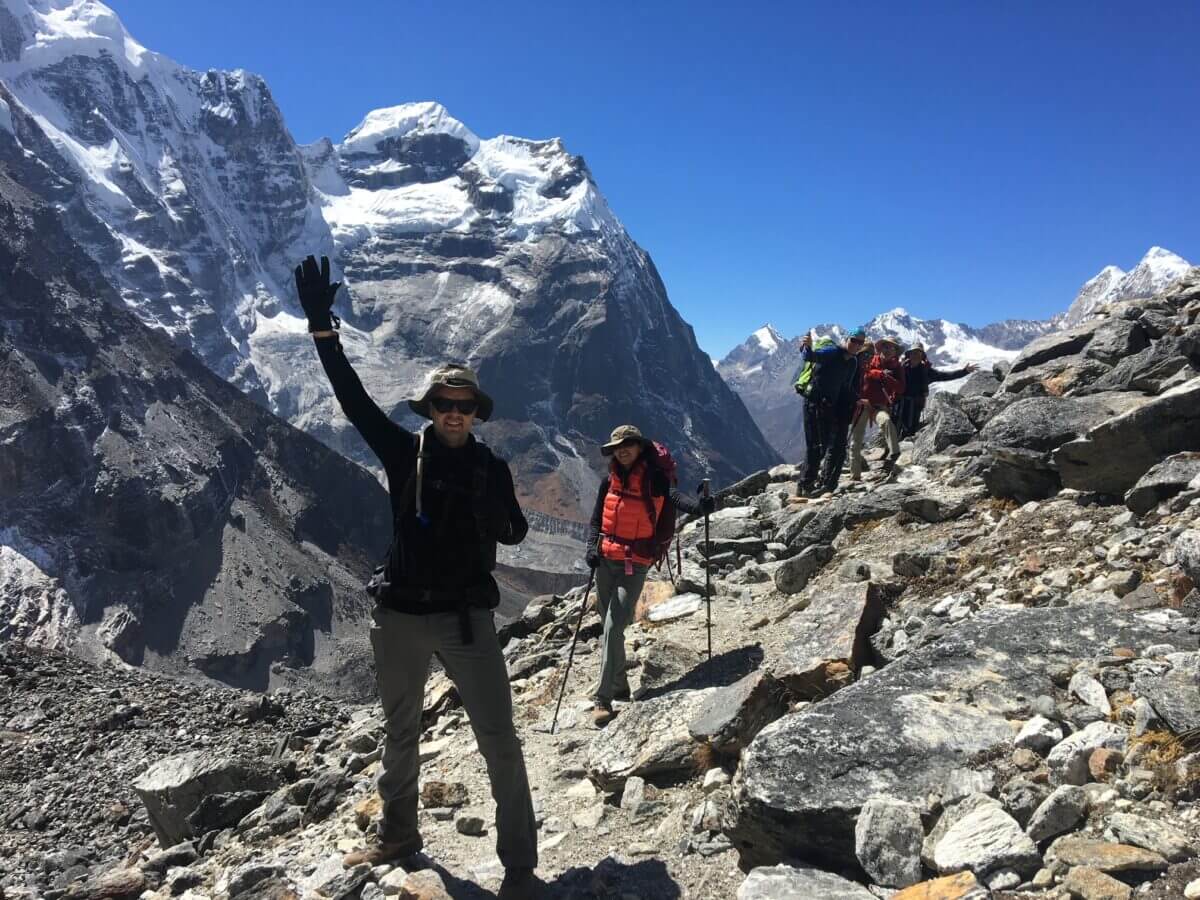
Summary: Mera Peak climbing is an adventure that leads you to the summit of Mera, the highest trekking peak in Nepal. At 6,476 meters (21,246 feet), Mera Peak is a struggle for would-be adventurers, needing not just physical strength and endurance but also the right equipment and mental conditioning. Preparation for this type of climbing is essential for safety and success, and it requires several aspects, including physical training, appropriate gear, and mental preparation.
Proper conditioning is the main contributor to preparing for Mera Peak. Throughout the trek itself, the route is technically non-technical, though due to the altitude, steep terrain, and long walking days, I would consider it a strenuous journey, highly recommended for those with reasonably good fitness. You should also pay special attention to cardiovascular fitness because you’ll need to build stamina for long days of trekking high up there. Frequent running, cycling , and swimming will all suit you well; you just need to build the aerobic capacity required to deal with the climb. Strength training also matters, especially for your legs, core, and upper body; you’ll be carrying a heavy backpack as well as a camera, and you’ll need balance on rugged terrain. Hiking with a weighted pack on local trails or hills can mimic the conditions you’ll experience on the climb. And spending time at higher altitudes, where lower oxygen levels allow your body a few days to prepare, is also helpful.
In addition to physical fitness, proper gear is necessary for climbing Mera Peak. Since you’ll be hiking in cold, rugged conditions, layering is key. A moisture-wicking base layer, insulating layers like fleece or down, and a waterproof outer layer will help keep you comfortable and dry. Your boots should be sturdy, waterproof, and give good ankle support for rocky paths and icy stretches. Because Mera Peak contains some technical areas, you’ll require specific climbing equipment like crampons, an ice axe, and a harness. These products are key to safely traversing snow-covered and/or ice-covered terrain. A decent sleeping bag (preferably one that is rated for cold-weather use) and a sleeping mat (for insulation) are keys to sleeping comfortably at high altitudes. Trekking poles should also be your best friends — they help maintain stability and reduce the strain on your knees on the way up and way down.
But mentally preparing yourself is just as important as physically preparing yourself. Mera Peak itself can be a big physical and mental challenge. You will experience long, arduous days and times when you are exhausted or feel like you’re drowning. It would be mental resilience, a crucial attribute to pull along these moments. Imagining your success, positivism, and fixing your eyes on the majestic scenery, could help boost your morale. When the fatigue hits, a positive attitude and focus on your goals will go a long way — you’ll find that the mental fortitude that you develop through mental preparation, visualization, and a mindset of ‘embracing the challenge’, will aid you in coping with the considerable mental demands of the climb.
Finally, as with any climbing preparation, being physically in shape, and coupling it with a good assortment of climbing equipment makes the job half done, and having a strong mental fortitude really prepares the climber for a successful Mera Peak expedition. With cardiovascular fitness, strength, and endurance built, and the right clothing and gear, you’ll be well on your way to your successful summit. Preparing yourself mentally will come in handy when the going gets tough, making the experience that much greater. If prepared in the right way, you couldn’t help but start the venture and arrive at the goal of summiting Mera Peak.
Mera Peak Climbing in Brief
Mera Peak Sherpa guide At 6,476 meters (21,246 feet), Mera Peak is one of Nepal’s tallest trekking peaks and provides an incredible way for climbers to experience the Himalayas sensation. Mera Peak is situated at Sagarmatha National Park giving the breathtaking panoramic sights of the tallest mountain of the world Everest, Lhotse, Makalu, and Cho Oyu. Although considered a non-technical climb, significant hazards include crevasses, wet and dry snow avalanches, the risk of falling and changing weather. This is why Mera Peak is the perfect expedition for those looking for an upper-level climb that isn’t technical enough to necessitate the skills for popular summit areas such as Everest. A great sense of achievement explication Mera Peak is possible if you are properly prepared to explore one of the most beautiful places on earth. Climbing Cho Oyu is normally completed as a trekking peak, meaning it is a combination of trekking and ascents of smaller mountains, making it a unique and exciting adventure for those who love the outdoors.
Expert Advice: Why Mera Peak Makes a Great Climb for Adventurers
There are a few reasons why Mera Peak is one of the finest climbs for adventurer seekers. The perfect mix of a non-technical climb and altitude makes it feasible for fit trekkers who feel they want to get a taste of Himalayan mountaineering without advanced technical climbing skills. It is perfect for climbers who have already experienced high-altitude trekking and are looking to challenge themselves. Mera Peak combines the beauty of some of the highest mountains in the world, including Everest, with a feeling of solitude difficult to find on a more well-traveled route. Moreover, the hike through isolated Sherpa hamlets and untouched wilderness offers a cultural experience that enhances the journey as a whole. As it is still in the realm of a trekking peak, the opportunity to summit a 6,000-meter peak offers adventurers a milestone achievement without the extreme technicality of other climbs. For budding mountaineers to keen trekker, Mera Peak presents a challenge but is within reach, making it also a great option for adventurers.
The Importance of Physical Training and Fitness
Mera Peak gear list Although Mera Peak is a strenuous physical endeavor, you will need a certain level of fitness to scale the summit. The trek requires hours of trekking each day, at altitude, across demanding terrain including glaciers, snowfields, and rocky ridges. This means that training with a focus on developing aerobic endurance through running, cycling, or swimming is crucial in the build-up. (247 words) This will prepare you for the strenuous demands of the trek, as well as help with the stamina needed for the long days of hiking. Strength training, especially for your legs, core, and upper body, is also important because trekking at high altitudes requires carrying a pack and keeping your balance on rocky or uneven surfaces. Walking up and down hills or staircases with a weighted backpack has proven to be the most effective way to mimic what you’ll be doing. Altitude preconditioning is also very important. You will be ascending above 6,000 meters upon Mera Peak, and although all trekking peaks are classified as trekking, there will not be enough oxygen at that height. If you can, spend time hiking in higher altitudes to train your body, making altitude sickness less of an issue. To sum up, a comprehensive training program that incorporates endurance, strength, and altitude conditioning will help ensure a successful ascent of Mera Peak.
Preparing Mentally for Climbing at Altitude
Mental preparation is an important but often overlooked part of scaling peaks such as Mera Peak. The physical demands of the trek — long days of hiking, steep ascents, high-altitude effects — can start to take a toll on your mental state pretty quickly. Mentally preparing for your climb means setting clear and realistic goals (such as reaching your state’s highest peak) and thinking about your motivation for the journey. Setting a vision of success and preparing for the challenges ahead will help fortify mental resiliency. It is also useful to practice a flexible mindset — conditions on the mountain can shift rapidly, from weather changes to physical fatigue. If you have a mountain to climb, preserving a positive outlook during moments of struggle and keeping your eye on the prize one step at a time will allow you to persevere through difficult times. Furthermore, knowing how to deal with stress and fatigue by way of breathing and mindfulness can help to make you centered and calm during the more tricky parts of the ascent. As with all high-altitude climbing, mental strength and optimism are crucial to not only pushing through inevitable obstacles but also significantly improving your chances of achieving success on Mera Peak.
The Important Equipment and Gear Needed for Mera Peak
Mera Peak acclimatization SPECIFIC GEAR AND EQUIPMENT FOR CLIMBING MERA PEAK Because of the high-altitude environment and the chance for cold temperatures, it’s important to bring the right gear. For shoes wear thick waterproof trekking boots with ankle support, as you will be walking on rocky, icy, and uneven surfaces. You’ll also need moisture-wicking base layers, an insulating mid-layer (like fleece or down), and a waterproof outer layer (a windproof jacket and pants) to protect against snow and wind — layering is critical in managing the cold. You will need a high-quality sleeping bag rated for subzero temperatures, as at night temperatures can drop significantly, even in the summer months. Along with clothing, gear like trekking poles, crampons, an ice axe, and a harness are required for the more challenging and technical parts of the ascent. A headlamp (and additional batteries) is crucial as well for early-morning or post-sunset ascents. Others are a first aid kit, water bottle or hydration system, energy snack, sunscreen, and sunglasses for the best protection from the high-altitude sun. The perfect equipment will keep you secure and cozy over your Mera Peak climb.
Dressing Appropriately for the Climb
The right clothing for Mera Peak climbs is very important for your comfort and safety on the trail in the harsh conditions of the Himalayas. The trick is to wear layers, so you can react to the changes in temperature throughout the course of the trek. Base layer: Starting with a moisture-wicking base layer, made from synthetic materials or merino wool, will help move sweat away from your skin. This will help avoid your body temperature dropping and getting a chill when you stop moving. Your next layer needs to be an insulating layer, like a fleece or down jacket, that holds in body heat to keep you warm. Finally, a waterproof and windproof outer layer is crucial to keeping you dry and warm from rain, snow, and vicious winds, all of which may engage at altitude. Waterproof, insulated boots with good ankle support are meant to protect your feet from the rocky and slippery terrain. You will also want to pack thermal socks, gloves, and a hat to keep your exposed parts warm. A balaclava or face mask can protect your face from wind and frostbite. Don’t skimp on a good pair of sunglasses or goggles to protect your eyes from the harsh sun and glare coming off the snow. The right gear will also keep you warm, dry, and protected, which is imperative for successfully reaching the summit of Mera Peak.
Route of Mera Peak Climbing
Mera Peak climbing season Here is an overview of the Mera Peak climbing route as a trekker in Nepal. The ascent usually starts in the small village of Paiya in the Khare area and steadily climbs to the peak at 6,476 meters (21,246 feet). The trail winds through dense forest, charming Sherpa villages , nd the rugged mountain terrain. As climbers ascend, they will traverse rocky terrain, glaciers, and snow-covered ridges. The ascent typically requires multiple acclimatization days at key locations, including Mera Base Camp and High Camp, to allow climbers to acclimatize to the height. Accustomed to glacial terrain, the last push from High Camp to the summit is steep and technical enough that it requires crampons and an ice axe, and in certain areas ropes. The challenge of the environment and the demanding nature of the terrain means that it is not a technical route; however, it is one that requires physical endurance and mental strength. Trekkers are rewarded for their hard work with breathtaking views of peaks like Everest, Lhotse, Makalu and Cho Oyu along the way. Weaving in, out, and around gates, trails, campgrounds, vehicles, and more while inside your target is a world-class endeavor and something that is difficult to be prepared for, but those who know the route, terrain, and what to prep for will have a climbing experience.
Acclimatization and Combatting Altitude Sickness
Peak climbing is not just a walk in the park, acclimatization is the key and we cannot compromise on it. The air is getting thinner — the oxygen levels drop because the high altitude can lead to altitude sickness. Symptoms may include headaches, dizziness, nausea, and fatigue. Altitude sickness can be avoided by acclimatizing yourself slowly through a timetable of slow and steady climb fare with prior rest days on important locations where you wouldn’t want to miss what this area has to offer (e.g. Mera Base Camp and High Camp). This gives your body a chance to acclimate to the decreased oxygen availability before you go higher. A standard acclimatization tactic involves the “climb high, sleep low” procedure, which involves ascending to altitudes higher than the one you intend to sleep, and then descending back down to lower elevations to sleep, helping your body better absorb oxygen and reducing the chances of developing acute mountain sickness (AMS). Eating and hydrating well and taking preventative medications can also help reduce the symptoms of altitude sickness. If the symptoms start, you need to immediately descend to lower altitudes to be safe. Sherpas are accustomed to the thin air and will keep an eye on your well-being throughout the trek. Being aware of how your body feels and taking enough time to acclimatize is the secret to making your successful ascent on Mera Peak.
Mera Peak climbing SONAM D SONAM D. is a longtime climber, most recently to K2 in 2019. He works as an expedition guide/leader and operator on the north side of Everest and has brought several foreigners to the summit. He lives in Nepal, where he manages a territory-based cleaning service. [Image courtesy of SONAM D.] The Role of Sherpas in Your Expedition
The Sherpa is an invaluable potential in any Mera Peak expedition These highly skilled mountaineers are experienced high-altitude climbers with years of experience leading the way and offering support from the moment climbers arrive to the time they leave. The Sherpas will lead you along the route, helping you navigate it, keeping you safe, and providing expert advice on the technicalities of the climb. They help set up base camps, help set up tents, and carry some of the heavier loads. But perhaps most importantly, they know the early symptoms of altitude sickness and are capable of administering medical treatment or descent if necessary. [360]Their in-depth understanding of the mountain environment and expertise in handling surprises — like abrupt weather shifts or rough ground — is what makes your Mera Peak experience so integral. Moreover, Sherpas bring with them a rich cultural background of the region, making the whole adventure more enjoyable by sharing inputs on local traditions, customs, and history. Their experience makes each climb feel as secure as possible, allowing climbers to go up without worrying about safety.
Protocols to ensure safety and risk management
Like any high-altitude trek, climbing Mera Peak comes with a certain level of risk — the altitude and weather can be immensely challenging due to the crisp terrain and high altitude. Protocols should be well established and followed during the entire expedition. Last updated on and the original post: One of the most crucial steps of all and something you need to pay careful attention to during your trip is acclimatization if you don’t allow yourself time to acclimatize and adjust properly to changes in altitude you could suffer from altitude sickness. A key part of risk management is monitoring climbers for symptoms of AMS, HAPE (High Altitude Pulmonary Edema), and HACE (High Altitude Cerebral Edema). It is crucial to trek with a licensed guide and Sherpa team, and we brought ours up the south side, they are trained for emergencies and will make decisions that keep you safe. The personnel will bring medical supplies, such as oxygen tanks, and will be on hand to aid climbers if altitude sickness or injury strikes. The weather in the Mera Peak can also change quickly, so you need to be ready for storms or snow at all times. Climbers are required to follow safety protocols throughout the climb, including wearing appropriate climbing gear (crampons, ice axes), using trekking poles for stability, following the guide’s instructions on terrain, maintaining distance between climbers, signs of altitude sickness, and other hazards. Risk management also involves having a plan for evacuation in an emergency, including the fastest paths down from the summit. Proper planning, high-caliber equipment, and expert guidance keep you safe on the way up.
Mera Peak: Permits, Cost , and Legal Requirements
Climb Mera Peak Everest Region Mera Peak Climb Important Permits & legal aspects should be before someone signs up or before someone goes towards Mera Peak ascent one should know what those permits and legal aspects with… As the Mera Peak falls within the Sagarmatha National Park, trekkers will need to apply for a trekking permit for this national park. And must obtain a Mera Peak climbing permit through the Nepal Mountaineering Association (NMA). NMA issues permits for trekking peaks and the price varies depending on the season, with peak climbing season from autumn to spring incurs higher charges. The permits are usually obtained through trekking agencies in Nepal, and climbers should verify that they have the proper documentation before embarking on the trek. Mera Peak climbs also require a licensed guide and at least one Sherpa to accompany trekkers. Apart from these permits, climbers should also follow the local laws regulating the area, which include promoting nature preservation and respecting the indigenous peoples. Waste Management Waste management and minimizing your environmental footprint is also an important responsibility to follow while trekking in the Himalayas. Here at High Altitude, we ensure that we have all the necessary permits in place, following regulations to contribute to a smooth expedition not only to Mera Peak but also to follow and abide by local laws and to keep it as an environmentally friendly trip as possible.
Last Minute Tips for an Amazing Climb
Mera Peak expedition Once you have completed all the preparations, it now comes down to your Mera Peak climb and making sure that it goes as planned, these are the final touches that will determine the success of your adventure! But the preparations that matter most include both a review of your gear and making sure you have each piece of equipment that you need, whether technical climbing equipment like crampons and ice axes, or layers of clothing for bitter cold. It’s important to make sure that everything’s working well, as faulty or insufficient gear can put your safety at risk. Also, being in good physical and mental shape is essential—stick to your training regimen so that you’re ready for long, hard days in tough conditions. You are working until the last weeks before the climb, so now is the time to focus on feed status and rest well. So is maintaining a positive mental attitude and the ability to adapt to changing conditions. Mental preparation from the outset — setting reasonable goals, staying motivated, and visualizing successful execution — will help you bounce back over the long haul of the trek. Finally, drink enough water, eat healthy food, and care for your body throughout the trek to stay strong and avoid fatigue. Following these preparations with the assistance of your Sherpa team will prepare you for the challenges of Mera Peak and ensure your best chance of summiting.